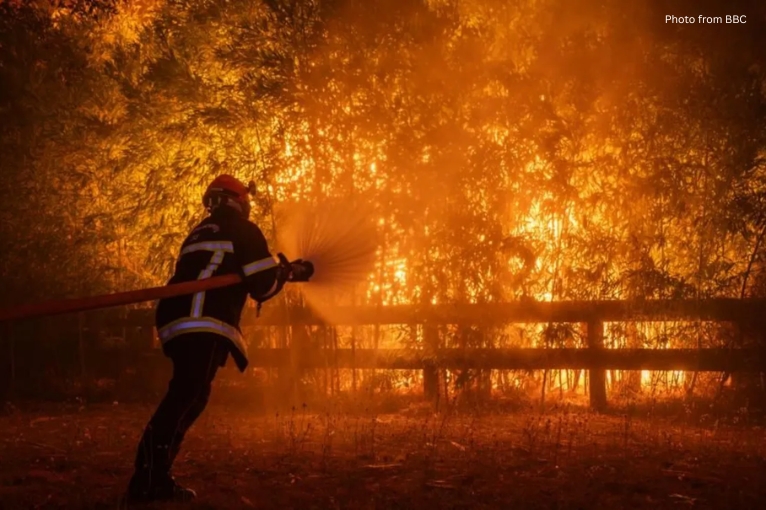
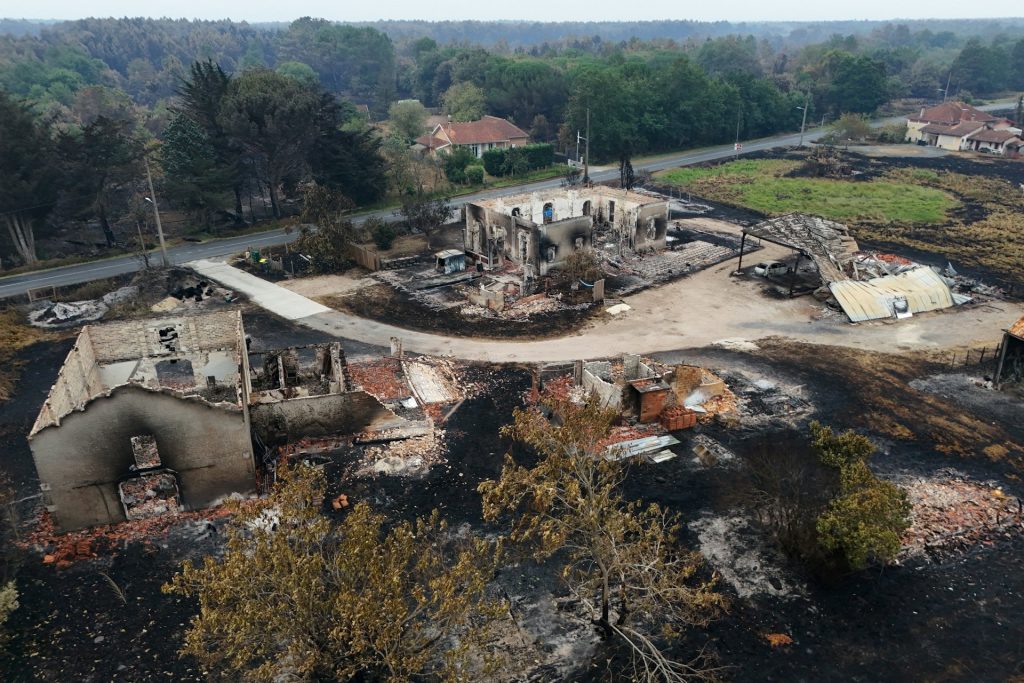
In late July, southwestern France’s Gironde department experienced its most severe forest fire since 1949. Local residents reported that the fire was sparked on Wednesday 22 July, by a machine clearing scrubland. Within ten days, the blaze consumed approximately 42,000 hectares of forest – an area equivalent to four times the size of Paris – and destroyed around 240 homes. The disaster forced more than 220,000 people to evacuate.
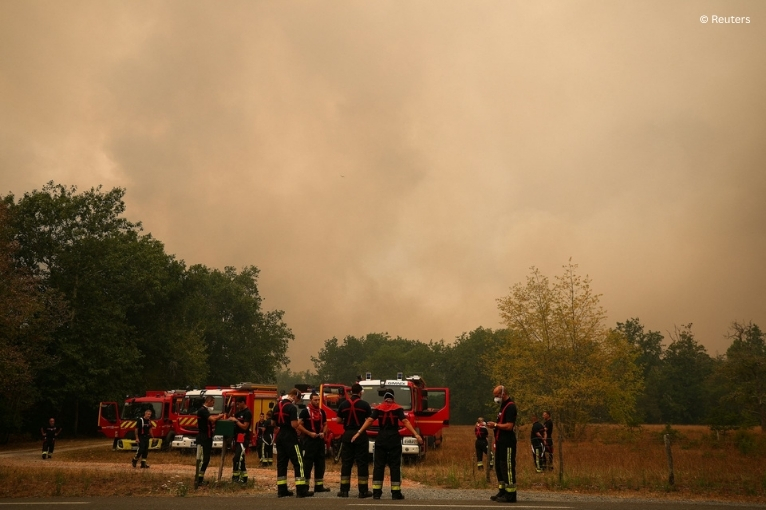
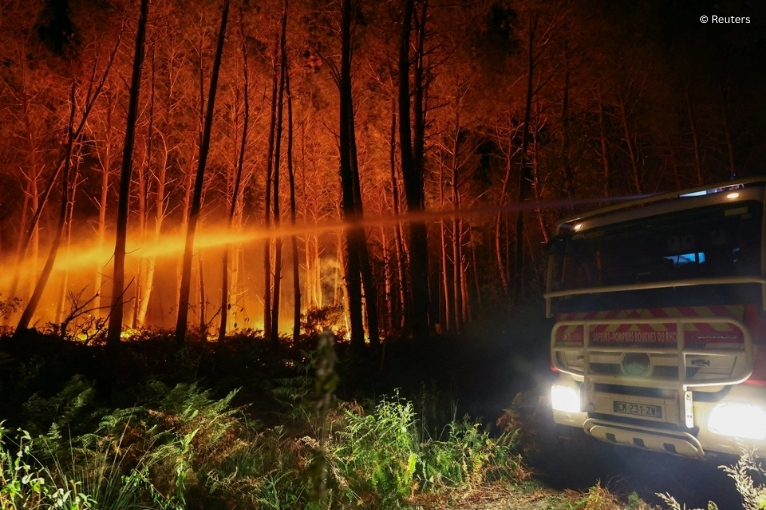
A total of approximately 3,300 firefighters from across France, supported by military and police personnel, forestry workers, and volunteers, were deployed to combat the flames – making this the “largest-scale” firefighting operation in the history of modern civil protection in France.
By 2 August, French Interior Minister Laurent Nunez announced that the fire had been brought under control and was no longer spreading. At a press conference, Gironde Prefect Sophie Brocas confirmed that the wildfire had caused no civilian casualties in the department.
Although some areas remained active, the overall situation has stabilised, with around 3,000 firefighters still on site conducting mop-up operations and establishing firebreaks.
The Union des Grands Crus de Bordeaux (UGCB) confirmed that no vineyards in Gironde had been directly affected by the fires. The fire fronts remained several kilometres away from the vineyards, and no impact on grape quality has been observed to date.
The UGCB draws reassurance from the 2022 fires, which took place at the same time of year and left the wines’ flavours entirely unaffected. The union further observed that with rain now falling and conditions gradually stabilising, the 2026 vintage looks set to be an early one and holds great promise in terms of quality.
The Bordeaux wine community’s solidarity and resilience have been deeply moving. Many wineries actively contributed to the relief effort, providing equipment, water, and manpower to exhausted firefighters. This spirit of mutual support is Bordeaux’s greatest strength in difficult times.